NeuroLearn Level 2 Safeguarding – Module 5 Gold Standard

NeuroLearn Safeguarding 2026

Module 5:   Thresholds and Multi-Agency Working

Professional Collaboration in Practice

Navigating the statutory levels of need and mastering your duty to challenge decisions through multi-agency pathways.

Your Learning Intentions

In this module, you must develop the professional skill to:  

Categorise the Level of Need.
You must be able to justify the distinction between Section 17 (Support) and Section 47 (Protection) based on the evidence you have recorded.
Execute the Duty to Challenge.
You must learn the formal protocols for professional disagreement to ensure that systemic delays never compromise a child’s safety.

Introduction:   The Threshold Windscreen
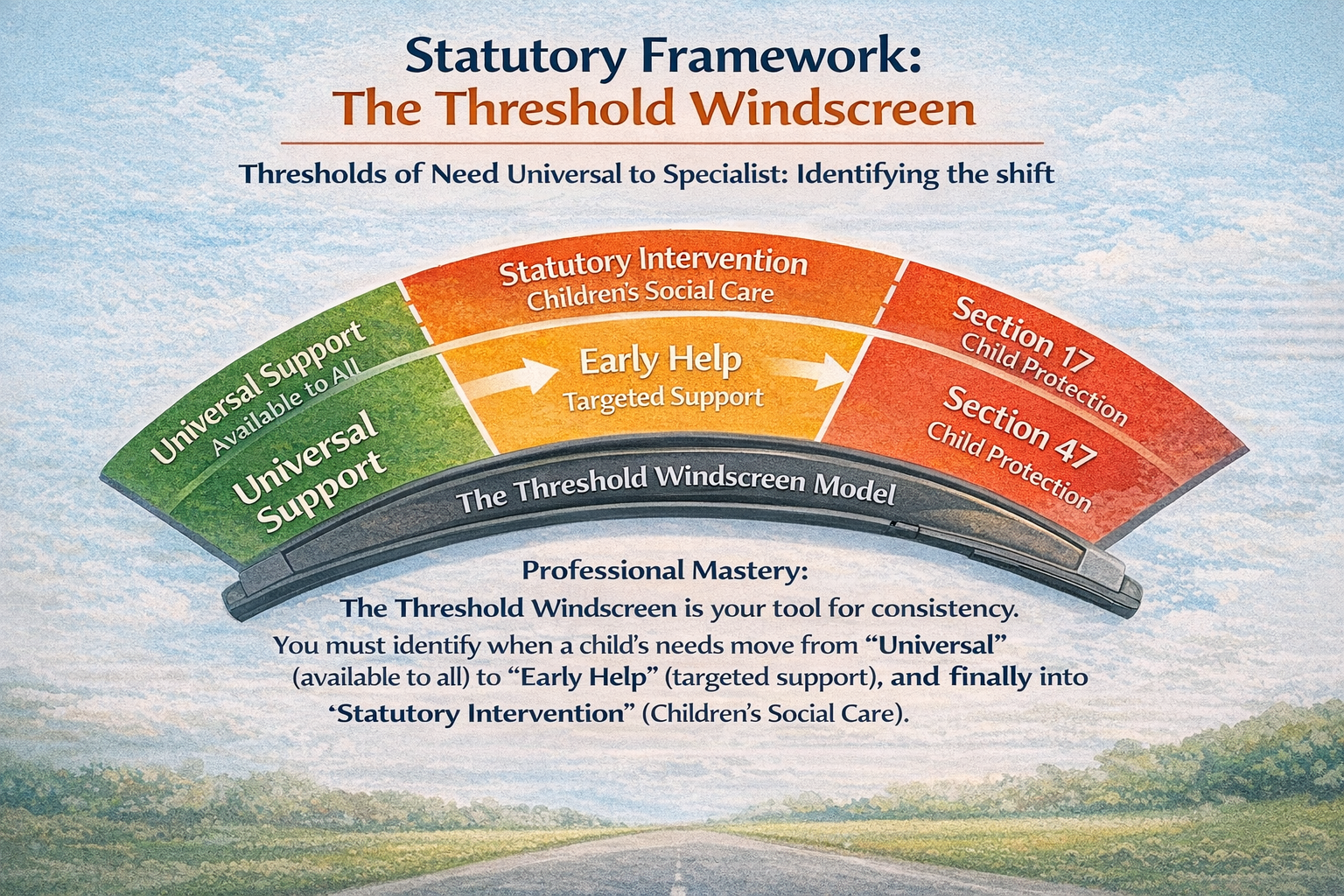
Threshold Windscreen Introduction

Statutory Concept:   The Threshold Windscreen is a visual model used by all agencies to ensure consistency when determining the level of support or protection a child requires.

In your practice, you must use this model to identify when a child’s needs have escalated beyond ‘Early Help’ and require statutory intervention from Children’s Social Care.

Statutory Framework:   The Windscreen Levels

Thresholds of Need
Universal to Specialist:   Identifying the shift.
Professional Mastery:   Level 1 is Universal (all children). Level 2 is Early Help (targeted). Level 3 is Section 17 (Statutory Support). Level 4 is Section 47 (Child Protection). Your individual duty is to evidence the move between these tiers with factual recording.

Your Practice:   Section 17 (Child in Need)

Children Act 1989
The Support Threshold:   Proactive intervention.
Statutory Application:   A child is ‘in need’ if they require services to maintain a reasonable standard of health or development. You use Section 17 when a family is struggling but the child is not in immediate danger of significant harm.

Your Practice:   Section 47 (Child Protection)

Children Act 1989
The Protection Threshold:   Immediate risk.
Statutory Application:   Section 47 is triggered when there is reasonable cause to suspect that a child is suffering, or is likely to suffer, Significant Harm. This is a mandatory investigation threshold.

Multi-Agency Working:   The MASH

The Information Gateway:   Collaborative decision making.
Professional Mastery:   The MASH brings together professionals from health, police, and social care. When you make a referral, the MASH uses shared data to decide thresholds. Prepare to share your DDP data to provide the ‘school perspective’.

Statutory Duty:   Working Together

Working Together 2023 Guidance
The Duty of Cooperation:   Breaking siloes.
Statutory Application:   Safeguarding is not a solo task. You have a legal duty to cooperate with other agencies. This includes attending meetings and providing factual reports based on your setting’s observations.
Working Together 2023 Document

Your Practice:   The Team Around the Child (TAC)

The Support Network:   Local collaboration.
Practice Application:   A TAC meeting is a community-level response. You must use these meetings to share the child’s strengths and advocate for the “Reasonable Adjustments” required by the Equality Act 2010.

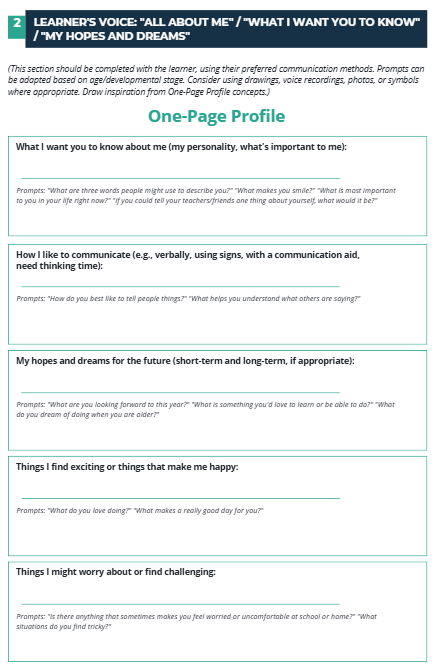
The DDP Profile:   All about Me!

Individual Advocacy:   The Dynamic Development Plan (DDP) ensures the child’s voice and sensory needs are central to multi-agency planning.
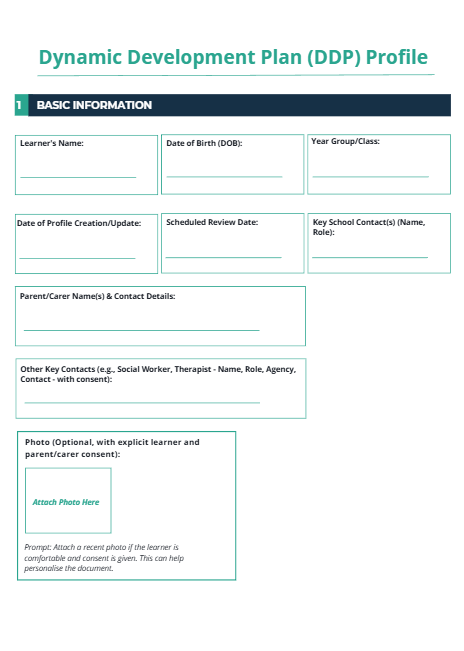
DDP Page 1
DDP Page 2

Professional Accountability:   The Duty to Challenge

When the System Fails:   Courage.
Professional Mastery:   If you report a concern and it is closed, but you still have evidence of risk, your duty is NOT over. You must have the courage to professionally disagree through formal channels.

The Escalation Pathway:   Disagreement Protocol

Following the Protocol:   Doing it right.
Practice Application:   Professional disagreement is a formal process. You must follow the ‘Disagreement Protocol’. This involves a written escalation to the Social Work Manager, citing your evidence.
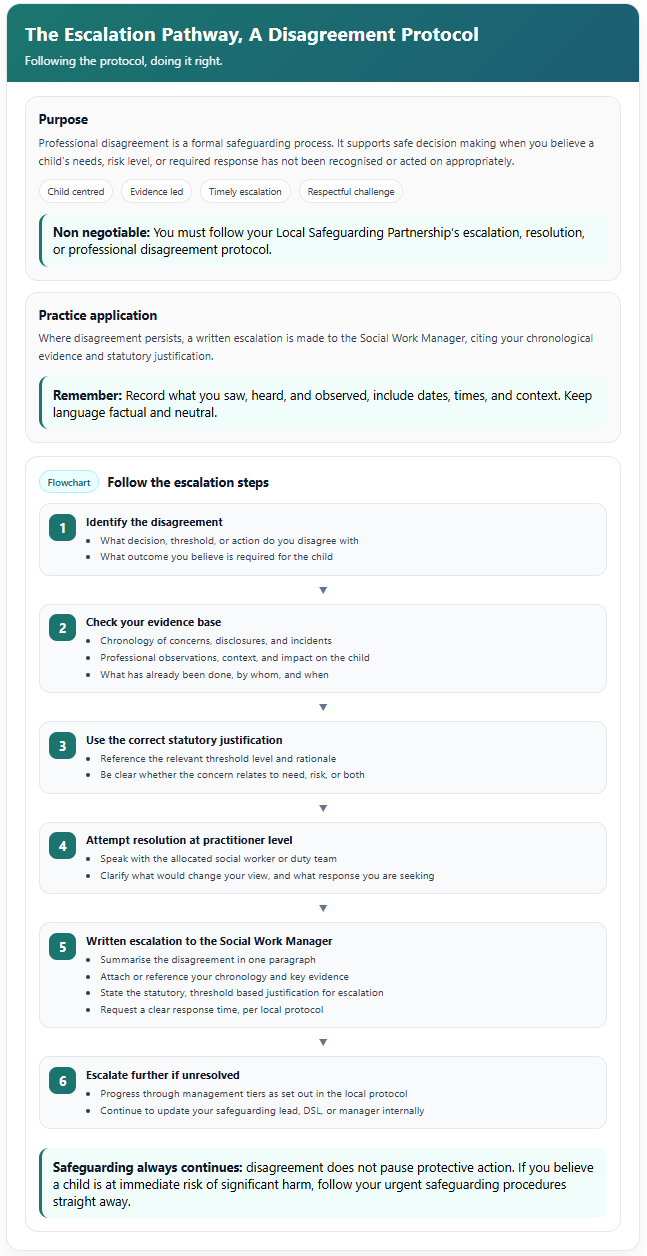
Disagreement Protocol Flowchart

Your Practice:   Advocacy for the SEND Learner

Ensuring parity in the system.
Practice Mastery:   In multi-agency meetings, you are the expert on the child’s communication. Ensure that the child’s neurodivergence is not used as a reason to dismiss their lived experience. Remind the group of the “Anticipatory Duty” under the Equality Act.

Professional Goal:   Consistency in Action

The Gold Standard:   Predictable protection.
Ensure that your referrals are always factual and evidenced. Factual referrals are more likely to meet the correct threshold first time, reducing the need for escalation.

Pathway to Success:   Scenario 1

1. Threshold Mastery:   You identify that a child is living in a home with severe domestic violence and there is an immediate risk of physical harm. Which statutory threshold must you advocate for?
  • A) Section 17:   Child in Need support.
  • B) Section 47:   Child Protection investigation.
  • C) Early Help targeted services.

Pathway to Success:   Scenario 2

2. The MASH Pathway:   You make a referral to the MASH. What information should you provide from your individual practice?
  • A) Your personal opinion on the parents’ character.
  • B) A factual chronology of concerns and the child’s baseline from the DDP.
  • C) A suggestion for which school the child should move to.

Pathway to Success:   Scenario 3

3. Escalation Duty:   You report a concern about neglect, but the case is closed. You observe the child’s hygiene continues to decline. What is your professional duty?
  • A) To accept the decision.
  • B) To trigger the Disagreement Protocol and escalate to the Social Work Manager.
  • C) To wait for another agency to notice.

Module 5 Summary

The safety of the child depends on your courage to navigate the system.

Professional Mastery:  
Verify your understanding of thresholds and the Disagreement Protocol in your Student Handbook before attempting the assessment.
Slide 1 of 18